You’ve probably seen the word “refurbished” plastered across phone listings online and wondered what it actually means. Is it basically new? Is it someone’s cracked and battered hand-me-down? The honest answer is that it can be either of those things, and pretty much everything in between.
If you’ve been searching for a refurbished iPhone meaning that actually makes sense, you’re in the right place. The word “refurbished” covers a surprisingly wide spectrum, and without knowing how to read between the lines, it’s easy to end up with a phone that doesn’t match your expectations or your budget.
In this guide, we’ll break down exactly what refurbished means in plain English, explain the grading systems sellers use (and why they aren’t as consistent as they should be), and walk you through your rights as an Australian buyer. You’ll also learn what a legitimate warranty looks like, why who you buy from matters enormously, and what to check before you hand over a single dollar. By the end, buying refurbished won’t feel like a gamble. It’ll feel like a smart, informed choice.
What ‘Refurbished’ Actually Means (and Why It Varies So Much)
In Australia, the word “refurbished” carries no standardised legal definition. A seller can apply it to a phone returned after two days with the screen protector intact, or to a device that has had its screen, battery and charging port all replaced. Both can legally be called refurbished. That gap matters because buyers often assume the word signals a consistent quality standard. It does not.
The terminology gets murkier because sellers use “refurbished,” “renewed,” “reconditioned” and “pre-owned” interchangeably. These terms can imply very different levels of work, but no Australian body defines or enforces what any of them must mean. Under Australian Consumer Law, consumer guarantees apply automatically regardless of the label used, but those protections apply after a problem arises, not before. The label gives you no reliable information upfront.
Most refurbished iPhones and Android phones go through some level of testing and cleaning before resale. The depth of that process depends entirely on who is doing it and what their standards are.
There is no formal Australian industry grading system and no independent body that certifies or audits how sellers assign grades. That is a genuine regulatory gap, and it means buyers carry more responsibility than they might expect.
The word “refurbished” is a starting point, not a guarantee. What actually matters is the grade definition, the warranty terms and who is accountable if something goes wrong.
Grading Systems Explained: What Grade A, B and C Really Tell You
So the grades are where the language gets more concrete, but only up to a point.
Most Australian sellers use a Grade A / Grade B / Grade C system, sometimes with a “Grade S” or “Like New” tier sitting above Grade A. As noted above, no Australian body mandates these grades, so what does each tier typically signal in practice?
- Grade A (or Like New): Minimal cosmetic wear, fully functional hardware, and a battery holding acceptable charge. The word “acceptable” is doing a lot of work here. Some sellers define a minimum battery health threshold; others are vague about the standard they apply. Always ask.
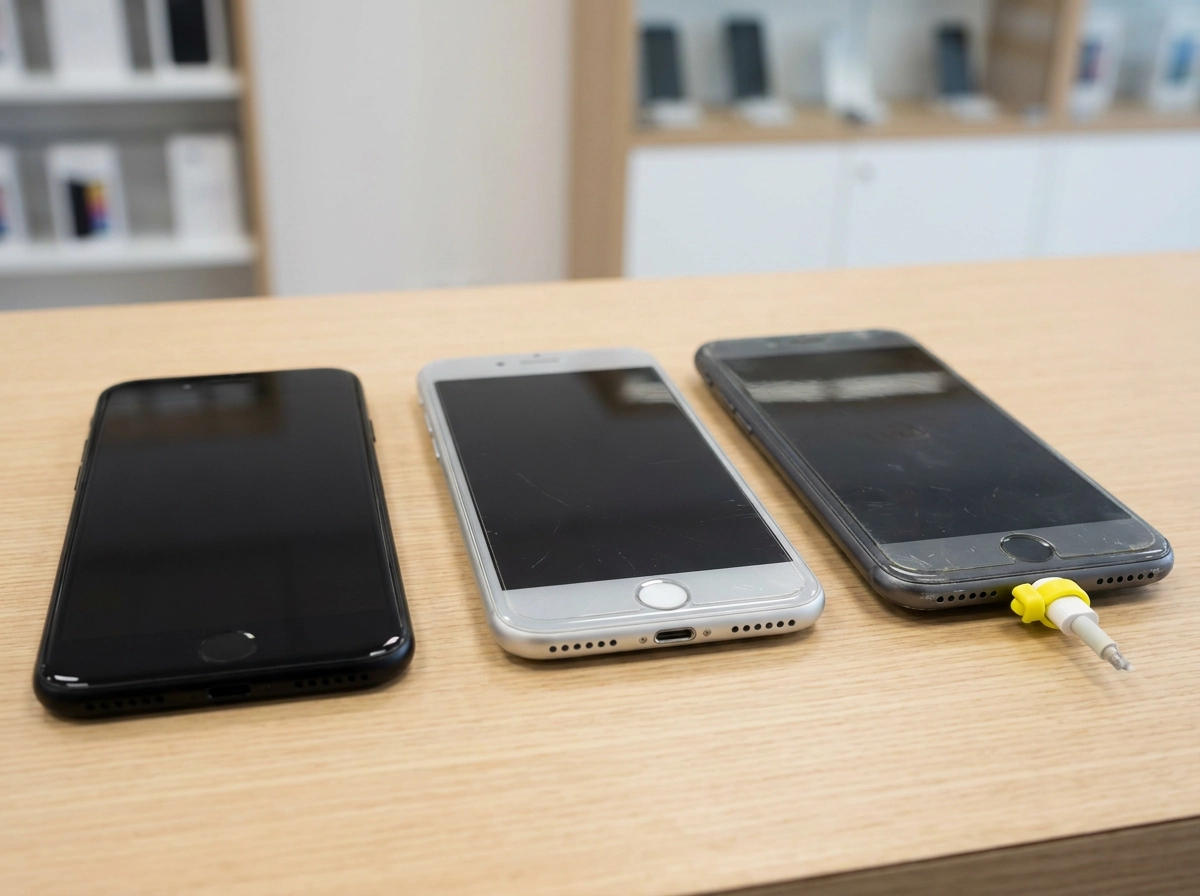
- Grade B: Visible scratches, scuffs or minor screen marks that you will notice in everyday use. Functionality is generally unaffected, but cosmetic imperfections are expected at this tier. If you are buying Grade B, go in knowing the phone will look used.
- Grade C: More significant cosmetic damage, potentially older battery health or repaired components. A Grade C phone can still work well, but it carries more risk, especially without a solid warranty behind it.
The practical takeaway is this: never assume one seller’s Grade A matches another’s. Ask the seller directly what their grade criteria cover, and get specifics rather than generalities.
For refurbished iPhones in particular, battery health deserves its own question. Ask whether the battery has been tested or replaced, and what health percentage the seller considers acceptable for the grade you are looking at. Apple’s Settings app shows battery health clearly, and any legitimate seller should have no issue demonstrating this before you pay.
Australian Consumer Law, Consumer Guarantees and Seller Warranties, They Are Not the Same Thing
Grading tells you about condition. What protects you if something goes wrong is a separate question entirely, and it’s worth understanding clearly before you hand over any money.
Australian Consumer Law (ACL) gives you automatic protections when you buy a refurbished phone from a business. Consumer guarantees cannot be excluded by any seller’s terms; a seller warranty layers on top of them.
Under the ACL, the phone must be of acceptable quality, fit for purpose, and match any description given. So if a seller lists a phone as “Grade A” and “fully functional,” it must genuinely be both. If it fails to meet that description, your consumer guarantee has been breached. The ACCC enforces these protections at a federal level, and state fair trading agencies are the escalation path if a seller refuses to help. You can read about your ACL rights on the ACCC website.
A seller warranty is a separate, additional promise. A 3-month or 1-year in-store warranty tells you what the seller will repair or replace, under what conditions, and how you go about claiming. It does not override your ACL rights; it layers on top of them.
Practically, the warranty matters because it defines how easy it is to get help. A local in-store warranty means you can walk in with a problem. An online warranty may require posting the device interstate and waiting, which is a real cost in time and inconvenience.
Before you pay, check the exclusions. Liquid damage and physical damage clauses are common. A seller should explain clearly what is and is not covered before the sale, not after a fault appears.
Who You Buy From Matters as Much as the Phone Itself
Refurbished phones in Australia are sold through four main channels: online marketplaces, large national retailers, telcos and local independent stores. Each carries a different level of accountability.
Online marketplaces often have the lowest sticker prices, but the trade-off is recourse. Some sellers operate without a physical presence in Australia, and if something goes wrong, you may find yourself arranging return postage, waiting for responses through a messaging portal, or navigating a dispute process rather than simply walking back in somewhere.
Large retailers and telcos offer more structured processes, but their refurbished ranges tend to be limited to specific models and grades, and pricing reflects the overhead of those bigger operations.
Local independent retailers, particularly those that also repair phones, sit in a different category. A store that repairs devices for a living understands component condition at a practical level. They can back a warranty with in-house capability rather than farming the problem out. And critically, they are physically there if something goes wrong.
For buyers in Coolangatta, Tweed Heads and the southern Gold Coast, that proximity is genuinely useful. Warranty support a short drive away is a different thing entirely from a national call centre number or a return postage label. If you want to see what that local experience looks like, Mobile Phone Repairs & Accessories in Coolangatta gives you a sense of what HocoTech offers in the area.
Before you commit to any seller, ask them directly: if this phone develops a fault within the warranty period, what happens next? How long will it take? Do I need to post it away? How a seller answers that question tells you a great deal about how confident they are in what they are selling.
What a Legitimate In-Store Warranty Actually Looks Like
So you’ve found a seller you’re comfortable with. Now look closely at what they’re actually offering in writing.
Duration is the first thing to check. A warranty under three months gives you very little practical protection; faults in refurbished devices often surface after the first few weeks of real use. A 1-year in-store warranty is a meaningful signal because it reflects the seller’s confidence in what they’ve sold you.
Plain language coverage matters as much as duration. A solid warranty spells out what it covers (hardware faults, component failures) and what it excludes (accidental damage, liquid ingress) before you hand over your money. If the exclusions only become clear after a fault appears, that’s a problem. Read the terms first, and ask if anything is unclear.
In-store fulfilment is a practical distinction, not just a nice-to-have. A warranty you can act on by walking through a door is genuinely different from one that requires logging an online claim, waiting for a reply, or posting your phone interstate. If a fault develops, local resolution is faster and far less frustrating.
Look at what’s included alongside the device. Free data transfer removes one of the most common hesitations when switching phones; migrating your contacts, photos and apps in-store has real value and saves real time. An included fast-charging cable matters too. A refurbished phone sold without one means an immediate extra purchase, and that cost belongs in your comparison.
Compare total value, not just sticker price. Add up the device, any accessories you’d need to buy separately, and the realistic inconvenience of posting a phone away for a warranty claim. Weighed against a local option with those things included, the arithmetic often looks different than it first appears.
A Practical Checklist: What to Confirm Before You Buy Any Refurbished Phone
Once you understand what a good warranty looks like, the next step is making sure the specific phone in front of you actually stacks up. Before you hand over any money, run through these checks.
- Ask what the grade actually means for that seller’s stock. Grades are not standardised in Australia, so a Grade A from one seller may not match another’s. Get a plain-language explanation of the criteria used.
- Check battery health on any refurbished iPhone. Go to Settings > Battery > Battery Health and Charging. A legitimate seller will show you this without hesitation, either in store or clearly listed online.
- Clarify the warranty before you commit. Ask how long it runs, what faults it covers, what it excludes, and exactly how you make a claim. If the answer involves posting the device interstate, factor that in.
- Confirm the phone is network unlocked. A locked device restricts which SIM cards you can use. This matters immediately if you are on a different carrier or plan to switch.
- Run an IMEI check. Dial *#06# to retrieve the IMEI, then run it through an IMEI checker to confirm the phone has not been reported stolen or flagged as financially encumbered. A phone with either flag should not be purchased, regardless of price.
- Find out what is in the box. A charger, cable or case that is missing adds immediate cost. Work out the true comparison price across sellers after accounting for anything you would need to buy separately.
- Test everything before you leave the store. Power the phone on and check the screen, speakers, cameras and charging port. Any reputable seller will expect this and will not object.
Why Buying Locally Changes the Value Equation for Refurbished Phones
Once you’ve run through the checklist, one question remains: where you buy matters as much as what you buy.
Price is the obvious comparison point, but it’s not the only one. Accessibility of warranty support, confidence in the grading and what’s included all shift the real-world value of a deal. A cheaper phone with a vague warranty and no local support can end up costing more time and money than a slightly higher-priced device backed by someone you can actually walk in and talk to.
A store that repairs phones as well as sells them applies that same hands-on knowledge when grading stock, and can honour warranty claims in-house.
Free in-store data transfer, already covered above as a legitimate warranty extra, is worth factoring into the total cost comparison.
For buyers in Coolangatta, Tweed Heads and the surrounding area, HocoTech sells refurbished phones with a 1-year in-store warranty, free data transfer and a fast-charging cable included. No hidden extras to factor in.
Beyond the transaction itself, buying locally gives you a direct point of contact for any follow-up questions, whether that’s about accessories, repairs or the device down the track.
The Bottom Line on Buying Refurbished in Australia
Grade definitions, warranty coverage and seller accountability are what separate a smart refurbished purchase from a disappointing one.
Australian Consumer Law guarantees a legal baseline for all business-to-consumer sales, but a local seller with a transparent warranty makes exercising those rights far simpler in practice.
Before committing to any refurbished phone, run through the basics:
- Confirm the grade criteria for that seller specifically
- Check battery health, particularly on refurbished iPhones
- Verify the IMEI is clean using an IMEI checker
- Understand the warranty, what it covers and how claims work
- Factor in included accessories before comparing prices
If you are in Coolangatta, Tweed Heads or the surrounding area and want to see refurbished phones in person before deciding, HocoTech is worth a visit. Popular models are available in store, and a broader range is accessible through their supplier network. Being able to ask questions face-to-face before you pay is exactly the kind of assurance that makes a refurbished purchase feel far less uncertain.
Conclusion
If you are ready to put this into practice, visit HocoTech in Coolangatta. See the phones in person, ask the questions this guide has outlined, and walk away confident rather than uncertain.