
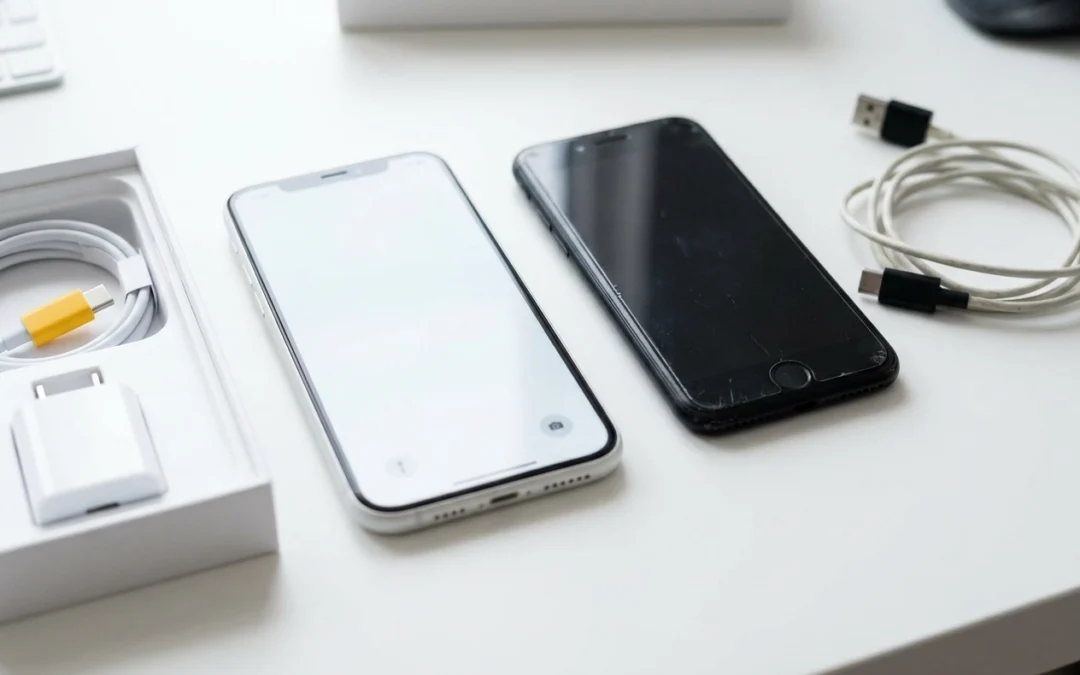
Refurbished iPhones vs Second-Hand iPhones: What’s the Difference?
You’ve probably seen the terms used side by side in online listings, Facebook Marketplace posts, and shop windows. “Second hand phones, refurbished phones”, people treat them like they mean the same thing. But here’s the thing: they don’t, and mixing them up could cost you more than you’d expect.
Whether you’re shopping on a budget or just trying to get a great deal on an iPhone, understanding the difference between these two labels is one of the most important things you can do before handing over your money. In Australia, neither term is officially defined by law, which means sellers can use them loosely, and buyers often pay the price for the confusion.
In this post, we’re going to break it all down in plain language. You’ll learn what “second-hand” and “refurbished” actually mean in practice, where your rights sit under Australian Consumer Law, and what to look for when buying locally. By the end, you’ll know exactly what questions to ask and what red flags to avoid, so you can buy with confidence.
Same Label, Very Different Risk
Most buyers treat “refurbished” and “second-hand” as two ways of saying the same thing. They are not, and that distinction can cost you real money.
The confusion is understandable. Both labels describe phones with a previous owner. Both are sold at a discount. And here is the part most buyers never find out: the terminology is unregulated, a gap the Regulatory Gap section explains in full.
What separates the two categories is not the phone itself. It is what the seller did before listing it, and what they are prepared to do if something goes wrong after you buy it. A second-hand phone might have been wiped and photographed. A genuinely refurbished phone should have been tested, restored and backed with a warranty. “Should” is doing a lot of work in that sentence, and that is exactly why understanding what the word refurbished actually guarantees matters before you hand over your money.
Whether you are searching for cheap second hand phones on Gumtree or refurbished mobile phones from a local retailer, the terminology you trust and the seller you choose will shape your experience significantly. This piece breaks down the real differences across testing, warranties and consumer rights so you can make a clear-eyed decision.
What ‘Second-Hand’ Actually Means
Start here: a second-hand phone is a used device sold largely as-is. The seller may have wiped it and done a factory reset, but that is often where the preparation ends. There is no standard process anyone is legally required to follow before listing a second-hand mobile phone for sale in Australia.
These phones turn up everywhere: private sellers on Facebook Marketplace and Gumtree, but also some retail stores that apply the “second-hand” label loosely. The source matters, because your rights differ significantly depending on who you buy from. Private sellers carry no statutory warranty obligation under Australian Consumer Law, and the consumer guarantee protections that apply to business sales are narrower and harder to enforce when applied to used goods sold privately.
No standard testing, component replacement or fault-disclosure process is legally required before listing a second-hand phone.
Price is usually the drawcard with cheap second-hand phones, and it is easy to see why. But that lower number often reflects something real: an unknown device history, components that have never been tested, and no safety net if the phone develops a fault two weeks after you hand over the cash.
The specifics can be genuinely invisible, even to an honest seller. Battery health, screen condition, water damage history and prior repairs may never come up, not because the seller is hiding anything, but because they simply do not know. If you are looking at a broader range of options before deciding, it is worth exploring what else is available, including phones beyond the most common models.
What ‘Refurbished’ Actually Means
Refurbished is a different category entirely, and the distinction starts with what happened to the phone before it was listed for sale.
A genuinely refurbished phone has been assessed, tested and restored to a defined standard by a retailer or qualified technician, with failing components replaced and the device wiped and reset to factory settings before going back on the shelf. The full component checklist is set out in “Where the Two Really Diverge.”
The key word is process. When a seller calls a phone refurbished, they are claiming they have done specific work to that device and that it now meets a defined standard. That is a fundamentally different claim from “it was working when I listed it.” A degraded battery is a common and often undisclosed fault in used iPhones. A proper refurbishment addresses that before sale; a second-hand listing usually does not. If you have ever had an older phone that barely makes it to lunchtime, you already know why a professional battery replacement makes such a difference to the experience.
Warranty — covered in detail below — is the clearest accountability signal. Under Australian Consumer Law, goods sold by a business must meet consumer guarantees including acceptable quality, and an established retailer will typically offer their own in-store warranty on top of those baseline protections.
So before accepting any ‘refurbished’ label, ask two direct questions: what was actually done to this device, and what warranty are you providing?
The Regulatory Gap: Australian Law Does Not Define Either Term
Here is something important that catches a lot of buyers off guard: asking whether a phone is “refurbished” or “second-hand” will not automatically protect you, because Australian Consumer Law does not set out a statutory definition that separates one from the other. In practice, this means any seller can use the word “refurbished” without having followed any prescribed testing or restoration process.
The ACCC has pursued retailers for selling refurbished phones labelled as new, but enforcement focuses on misrepresentation, not on whether a refurbishment standard was met. The law targets false descriptions; it does not mandate what “refurbished” must involve.
That said, consumer guarantees do apply automatically under Australian Consumer Law when you buy from a registered business. Those guarantees cover acceptable quality, fitness for purpose and accurate description, and they apply whether the device is used or refurbished. Where things get complicated is private sales. Buy from an individual rather than a business and those protections narrow considerably; your practical options if something goes wrong become much harder to enforce.
For buyers in Queensland and northern NSW, this regulatory gap has a direct consequence: the label on the listing tells you very little on its own. The burden falls on you to ask what was actually done to the device, and to choose a seller who can answer that question with specifics rather than marketing language.
This is exactly why a seller’s own warranty and their willingness to explain their process matter so much. In the absence of mandated standards, those two things are your clearest signal of genuine accountability.
Where the Two Really Diverge: Testing, Warranty and Accountability
So, what does that gap actually look like in practice? Here is where the two categories separate in ways that matter to your wallet.
Testing is the first dividing line. A second-hand phone may have been factory reset before sale, but that is often the extent of it. A credible refurbished phone seller runs the device through diagnostics: battery health, screen responsiveness, cameras, audio, connectivity and charging port. You are not guessing what you are getting.
Parts are the next issue. Second-hand mobile phones are sold with whatever is inside them, including a battery holding 70% of its original charge, a touch sensor with dead zones, or a screen that was previously replaced with a non-genuine part. None of that may be disclosed. With a properly refurbished phone, failing components should have been identified and replaced before the device was listed.
Warranty is the clearest difference of all. Private second-hand sales carry no warranty obligation. If the phone dies a fortnight later, you have very little practical recourse. Refurbished phones sold by a reputable retailer come with a defined warranty period. HocoTech’s refurbished iPhones include a 1-year in-store warranty, which means a local, straightforward path to resolution if something goes wrong.
Accountability follows from that. A local retailer has a reputation to protect and a door you can walk back through. A private seller does not.
Extras also add genuine value. HocoTech includes free data transfer and a fast-charging cable with every refurbished phone. A private seller offers neither.
Finally, disclosure. A trustworthy seller will grade their stock and describe cosmetic condition clearly. If a seller uses the word “refurbished” without any grading or condition description, treat that as a warning sign.
Red Flags to Watch for When Buying Second-Hand Mobile Phones
Knowing what separates a genuine refurbishment from a rebranded second-hand sale is useful in theory. Knowing what to look for in a live listing is what actually protects your money.
Here are six warning signs worth checking before you commit.
No warranty offered. Any seller using the word “refurbished” but offering no warranty should prompt an immediate question: what did the refurbishment actually involve? Ask for a written warranty before you proceed.
Vague or missing process description. If the listing cannot explain what was tested, what parts were replaced, or what standard the device was restored to, the “refurbished” label is likely just marketing. A genuine process is describable.
No condition grading. Reputable refurbished phone sellers grade their stock clearly, for example Grade A or Grade B, and describe cosmetic condition so you know exactly what you are receiving before it arrives or before you hand over cash.
IMEI not verifiable. Always check the IMEI on any second-hand phone before you buy. It confirms the device has not been reported stolen and is not carrier-locked in a way the seller has not disclosed. Most carriers and free online tools allow a basic IMEI check.
Battery health not disclosed. Battery degradation is a frequently undisclosed fault in used iPhones. A seller who cannot or will not show you the battery health percentage in the device settings is withholding information you genuinely need to make a fair assessment.
Price that seems too good. Cheap second-hand phones priced well below market value sometimes reflect undisclosed damage, a blacklisted IMEI, or a device that looks fine cosmetically but has underlying faults. If the price does not make sense, ask why before you pay.
Buying Refurbished Phones Locally on the Gold Coast: What to Look For
Knowing the red flags is useful, but it only gets you so far if you’re still buying from a stranger online. Shopping locally changes the dynamic considerably.
When you buy from a bricks-and-mortar retailer, you have somewhere to go if something goes wrong. That sounds simple, but it matters. With a private sale or an online marketplace purchase, your options narrow quickly once the transaction is done.
Before you commit to any local seller, ask them to explain their refurbishment process in plain terms. A genuine answer will cover what diagnostics they run, which components they test and how they handle anything that fails. If the response is vague, the “refurbished” label may be doing more marketing work than descriptive work.
A written warranty is the minimum worth accepting. Verbal assurances are hard to act on. Written terms give you something enforceable and a clear record of what the seller committed to.
HocoTech in Coolangatta sells refurbished iPhones backed by a 1-year in-store warranty, which means local accountability you can act on in person rather than chasing a return postage label.
For buyers across Tweed Heads, Coolangatta and the broader southern Gold Coast and northern NSW region, there’s an added practical benefit to buying refurbished phones from a repair-capable retailer. The same business that sold you the phone can often help if it needs attention down the track.
Before you finalise anything, ask to see the battery health percentage in the device settings, confirm the grading tier and ask what components were tested. Any reputable local seller will answer those questions without hesitation.
The Bottom Line: What to Remember Before You Buy
Once you have done your research and asked the right questions, the decision comes down to a few clear principles.
If a seller cannot explain what was done to a device, treat it as second-hand regardless of the label. Refurbished should mean a documented process of testing, restoration and quality assurance. The word alone means nothing without that evidence behind it.

Second-hand phones are not automatically a bad choice, but they carry real risk: unknown history, no warranty and limited options if something fails shortly after purchase. That risk is worth pricing in, not just ignoring because the upfront cost looks attractive.
As noted above, ACL protections are meaningfully stronger through a registered business than a private seller.
As set out above, a written warranty from an established business remains the clearest accountability signal.
For buyers in Tweed Heads, Coolangatta and the broader southern Gold Coast region, buying locally adds something that an online listing or a private sale cannot: accountability you can act on in person. When you are comparing refurbished mobile phones, that accountability belongs in the calculation alongside the price.
Conclusion
The label on a phone listing costs nothing to type. What matters is the evidence behind it.
Before you pay, remember these principles: “refurbished” only means something when a seller can document the testing and restoration process; second-hand devices carry real risk that should be reflected in the price; Australian Consumer Law protects you more effectively through a registered business than through a private sale; and a written warranty is the clearest signal that accountability actually exists.
If you are in the southern Gold Coast region and ready to buy, do not settle for vague descriptions or verbal promises. Ask direct questions, request documentation, and buy from a local business that will still be there if something goes wrong.
The right phone at the right price exists. Knowing what to look for is what gets you there without regret.
Frequently Asked Questions
What is the main difference between second-hand and refurbished phones?
The key difference lies in what the seller did before listing the phone and their accountability afterward. A second-hand phone is typically sold as-is, often just wiped and factory reset with no standard testing process required. A refurbished phone should have been professionally tested, assessed against a defined standard, have failing components replaced, and comes with warranty coverage and accountability. The distinction is about process and accountability, not the phone itself.
Does Australian law define what 'refurbished' means for phones?
No. Australian Consumer Law does not provide a statutory definition that separates 'refurbished' from 'second-hand,' which means any seller can use the word 'refurbished' without following any prescribed testing or restoration process. This regulatory gap places the burden on buyers to ask specific questions about what work was actually done to the device. However, consumer guarantees for acceptable quality and accurate description do apply when you buy from a registered business.
What are my consumer rights when buying from a private seller versus a business?
Your protections are significantly stronger when buying from a registered business. Private sellers carry no statutory warranty obligation under Australian Consumer Law, and consumer guarantee protections that apply to business sales are narrower and harder to enforce in private transactions. When you buy from a business, consumer guarantees automatically cover acceptable quality, fitness for purpose, and accurate description, regardless of whether the device is used or refurbished.
What should I check before buying a second-hand or refurbished phone?
Before committing to a purchase, check for: a valid warranty (preferably written), a clear description of what refurbishment work was done, condition grading (such as Grade A or B), the IMEI verification to confirm it hasn't been stolen or carrier-locked, battery health percentage displayed in device settings, and whether the price aligns with market value. If a seller cannot answer these questions directly, treat it as a warning sign regardless of the label used.
Why is buying from a local retailer better than buying second-hand online?
A local retailer provides accountability you can act on in person—if something goes wrong, you have somewhere to go rather than chasing online support or return logistics. A local business has a reputation to protect and can often provide after-sale support through the same repair-capable team that refurbished the phone. Additionally, you can inspect the device and verify battery health and cosmetic condition in person before purchasing, and you have a written warranty with clear local resolution options.